Freezer & Cold Storage Labeling: Beating the Condensation Problem
Cold rooms defeat labels twice — once at application, when adhesives too stiff to flow meet surfaces wearing a film of condensation, and again in service, when daily door-cycling refreezes moisture under every edge. The failures look identical ("labels keep falling off the racks"), but the fixes are different, and knowing which problem you have is most of the solution.
1. The Three Cold-Room Failure Modes
Every adhesive TDS lists a minimum application temperature; below it, wet-out physically cannot happen. Standard acrylics want room temperature. Applying at -20°C with a standard stock is placing, not bonding.
Cold surfaces pulled into ambient air condense moisture instantly; surfaces inside the freezer wear frost. Either way there is a water layer where the bond should be.
Adhesive tack drops as temperature drops, while door cycling swings the surface across the dew point daily — the freeze-thaw edge-jacking mechanism from outdoor physics, indoors.
2. The Cold-Chain Toolkit
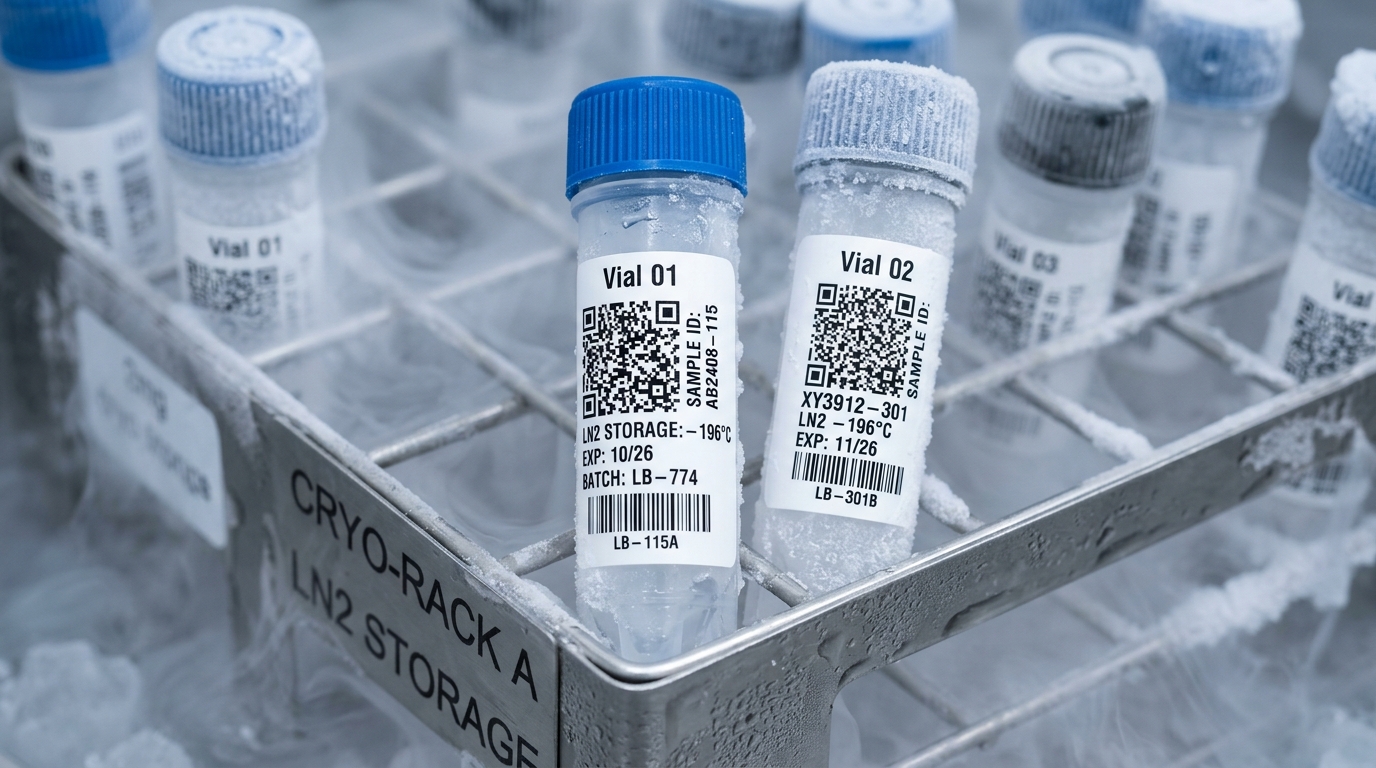
The frozen-vial standard — applies to already-frozen surfaces; LN2 detail in the cryogenic guide.
Freezer-to-autoclave span for containers that cycle; barcode-friendly matte face.
Freezer aisle and cooler floor marking where standard floor tape embrittles.
The ambient-side aisle and 5S system — see the floor marking guide.
Label rack beams and location plates at the dock, warm and dry, before install — then the material only has to survive cold, not bond in it. Reserve frozen-surface stocks for what genuinely must be labeled in place. And print location barcodes on matte stock: scanner performance through frost glare is the same specular problem covered in the barcode guide.
Going colder than the warehouse?
The cryogenic guide covers the -80°C and -196°C end: LN2 vapor phase storage, frozen vial application, and DMSO/solvent chemistry on top of the cold.