HomeGuidesOutdoor UV Durability
Environmental Durability Engineering

Why Outdoor Labels Fail: UV, Thermal Cycling & Water

Outdoors, a label fights three independent kill mechanisms at once — and they attack different layers of the construction. UV goes after the print and the film, thermal cycling goes after the adhesive bond, and water goes after the edges. A label system survives a decade outside only when all three defenses are specified together, which is why "outdoor-rated" is a system property, never a face-stock property.
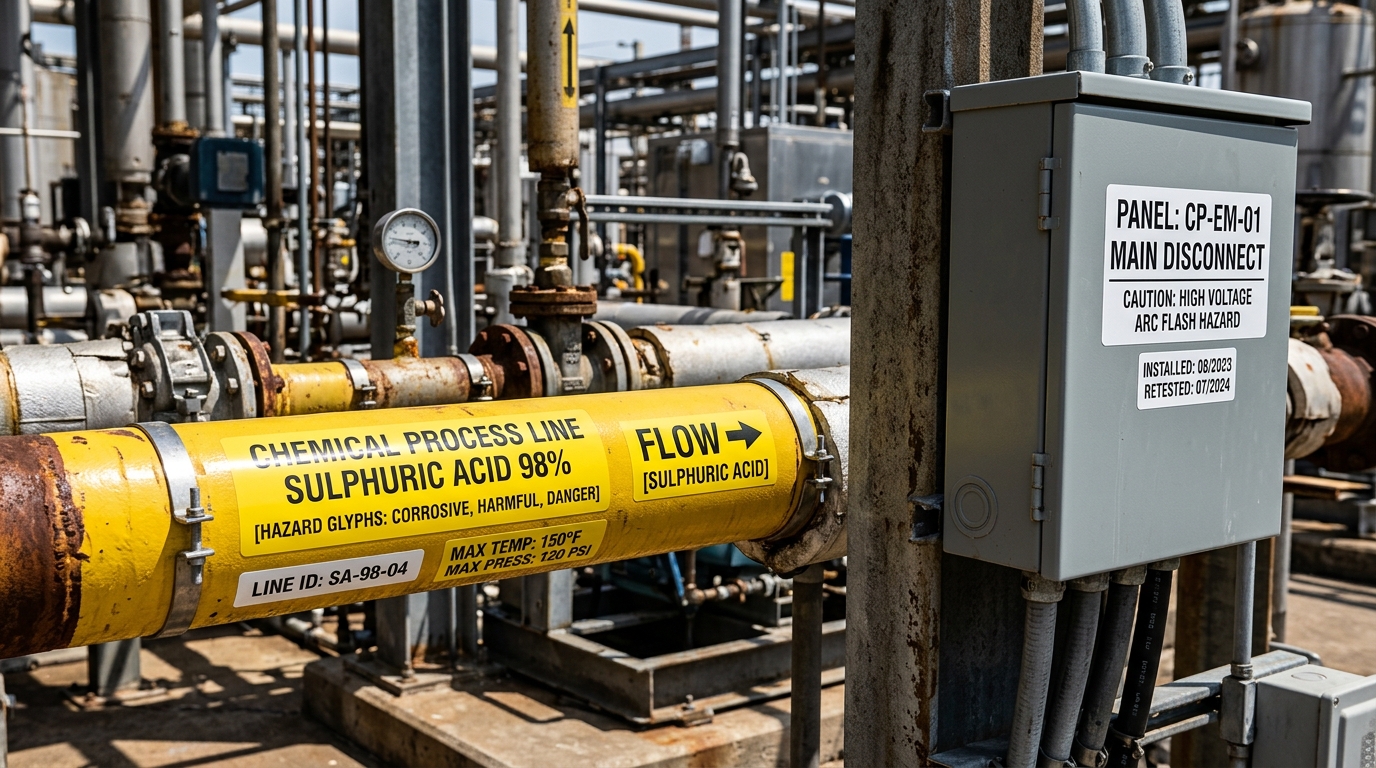
Outdoor-rated B-595 vinyl labeling exposed to weathering — the 8-10 year outdoor durability class
Figure 1: Outdoor-rated vinyl in service — UV-stable film, permanent acrylic, resin-class print.B-595 class · 8–10 yr exposure rating
Sponsored Weatherproof Identification
Industrial Label Printers & Materials
Relevant Technical Equipment & Consumables [Ad Slot outdoor-top]

1. The Three Kill Mechanisms

UV Photodegradation
Mechanism
UV-B photons carry enough energy to break polymer C–C bonds. Films chalk and embrittle; printed images bleach.
First Victims
Wax ribbon prints (weeks-to-months), unstabilized films, paper stocks.
Engineering Defense
UV-stabilized vinyl/polyester face stocks, full resin ribbon prints, acrylic overlaminates — acrylic chemistry is inherently UV-transparent and does not yellow.
Thermal Cycling
Mechanism
A dark enclosure face swings 60°C+ every day. Differential expansion between label and substrate shears the adhesive bond thousands of cycles per decade.
First Victims
Stiff films on metal, adhesives applied below their minimum application temperature, sharp label corners (stress concentrators).
Engineering Defense
Wide-service-range systems (B-595: -40°C to +82°C; B-8591: -70°C to +110°C), radiused corners, full-pressure application in warm conditions.
Water & Edge Ingress
Mechanism
Rain does not attack the label face — it attacks the adhesive edge, wicking under lifted corners, then freezing and expanding.
First Victims
Bubbled or light-pressure applications, labels crossing seams and rivets, paper anything.
Engineering Defense
Firm squeegee application onto clean dry surfaces, avoiding substrate seams, overlaminated constructions that seal the print layer.

2. The Outdoor-Rated Bench, By Application

SystemService EnvelopeOutdoor Role
B-595 industrial vinyl-40°C to +82°C · 4.0 mil · permanent acrylicFacility signage, pipe markers, safety decals — the 8–10 year workhorse (515 SKUs)
B-8591 weather-resistant polyester-70°C to +110°C · UL 969 (MH17154)Outdoor equipment nameplates and rating plates where certification travels with the label
B-920 overlaminated vinyl-29°C to +82°C · built-in acrylic overlamPre-printed placard sets — solar, utility, code-mandated wording
B-921 reflective sheeting-29°C to +82°C · ASTM D 4956 Type 1 · ~5 yrRetroreflective circuit marking and night-visible identification
B-584 reflective tape-40°C to +70°C · Class 1 acrylicRetroreflective striping and visibility marking on equipment
Surface temperature is not air temperature

A dark painted enclosure in full summer sun runs 25–30°C above ambient — a 35°C day puts the label at 60–70°C, uncomfortably close to vinyl's ceiling. If the substrate is dark metal in sun, spec against surface temperature and consider the polyester tier (B-8591) even when air temperature looks safe.

3. Field Myths vs. What the TDS Data Says

“Laminating an indoor label makes it outdoor-rated.”
The laminate protects the print, not the adhesive. Thermal cycling still shears an indoor-grade bond, and the film under the laminate still embrittles. Outdoor rating starts at the adhesive.
“White labels all age the same.”
Pigment systems differ. Outdoor-rated films use UV-stabilized formulations; unstabilized films yellow and chalk. The rating is in the TDS, not visible on the roll.
“If it survived winter, it will survive summer.”
The mechanisms are different — winter attacks the adhesive by freeze-thaw, summer attacks film and print by UV plus heat. One season proves nothing about the other.
“Any resin print is UV-proof forever.”
Resin dramatically outlasts wax outdoors, but on a 10-year exposure the overlaminated constructions hold legibility longest — which is why placard stocks like B-920 build the laminate in.

Planning facility or outdoor marking at scale?

The outdoor & facility portal maps materials to pipe marking, safety signage, and yard identification — including the ASME A13.1 color code system.

Open Outdoor & Facility Portal