Autoclave Labeling: Surviving 121°C Saturated Steam
An autoclave is three label-killers running simultaneously: wet heat above every commodity film's rating, steam working the adhesive bond line, and pressure swings stressing every edge. The temperature number alone understates it — plenty of "130°C" labels die at 121°C because the rating was dry. Here is the failure physics and the short list of stocks that ride the cycle.
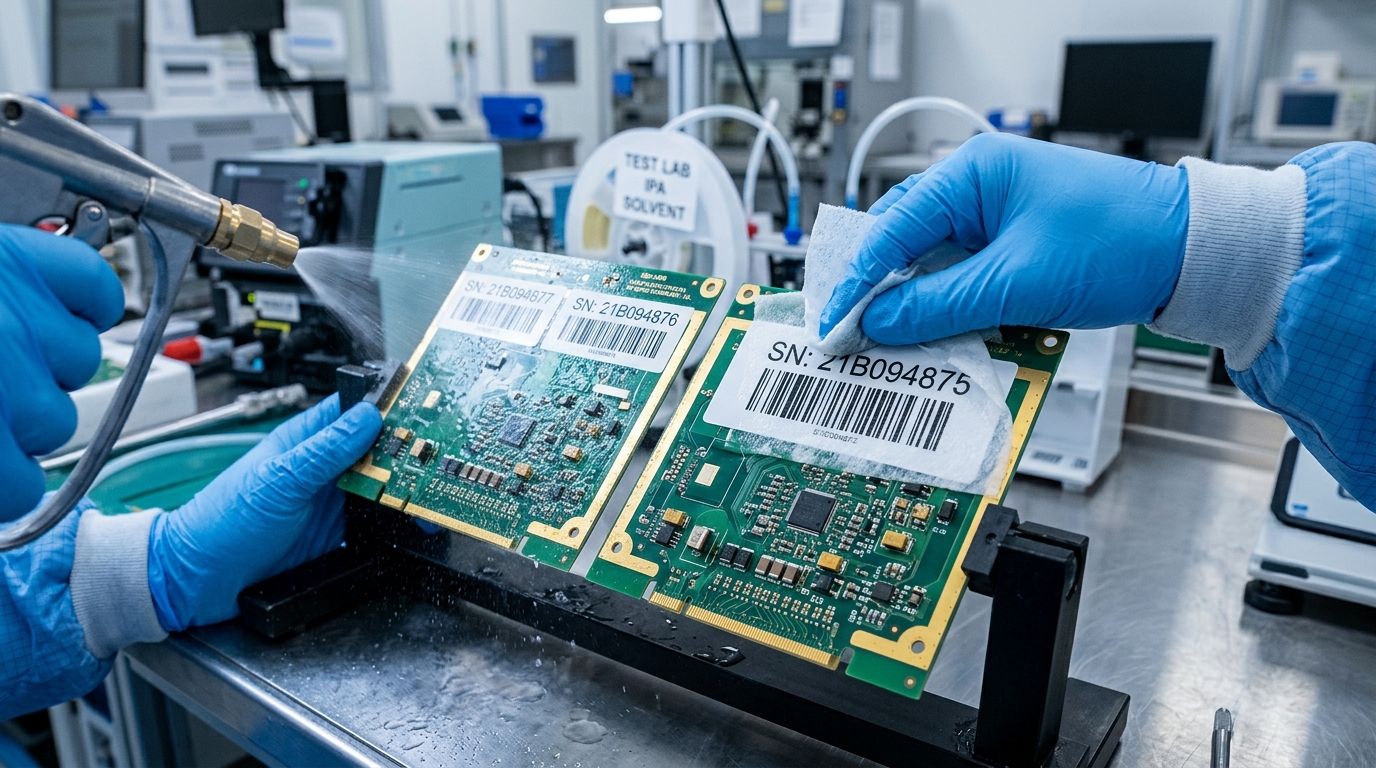
1. Three Simultaneous Attacks
2. The Cycle-Rated Shortlist
Matte white polyester rated -196°C to +160°C — one stock covers LN2 storage, -80°C freezers, and both 121°C and 134°C steam cycles. For containers that cycle between cold storage and sterilization, this eliminates the relabel step entirely.
B-490 specifications-40°C to +160°C, UL 969 recognized (MH17154). The equipment-and-glassware answer when the cold end never goes below a standard freezer — and the matte face is the barcode-friendly surface from the barcode engineering guide.
B-488 specifications- Print with the TDS-matched full resin ribbon — wax prints wash off in steam. The pairing logic lives in the ribbon compatibility chart.
- Apply firm and bubble-free onto clean, dry, room-temperature surfaces, then let the acrylic build before the first cycle (the 24–72 h dwell rule from the adhesive guide).
- Round label corners where the converter offers it — square corners are where vacuum-pulse edge lift begins.
- Validate on your actual cycle: one tray of labeled sacrificial glassware through a worst-case load beats any datasheet extrapolation.
The rest of the lab workflow
The laboratory & cryogenic portal maps materials across the full lab: vials, slides, cassettes, freezers, and the solvent gauntlet between them.