Magnetic & Non-Adhesive Labeling: When Sticking Is the Wrong Answer
A quiet statistic from our TDS database: of 603 Brady material families, 302 use no adhesive at all. Half of industrial identification holds on mechanically — magnetism, shrink recovery, cable ties — because adhesive is sometimes the wrong tool: too permanent for a slotting plan, too damaging for leased paint, or simply defeated by the surface. Here is the non-stick half of the toolbox, matched to the four situations that call for it.
1. The Four Non-Adhesive Systems
2. Routing by Situation
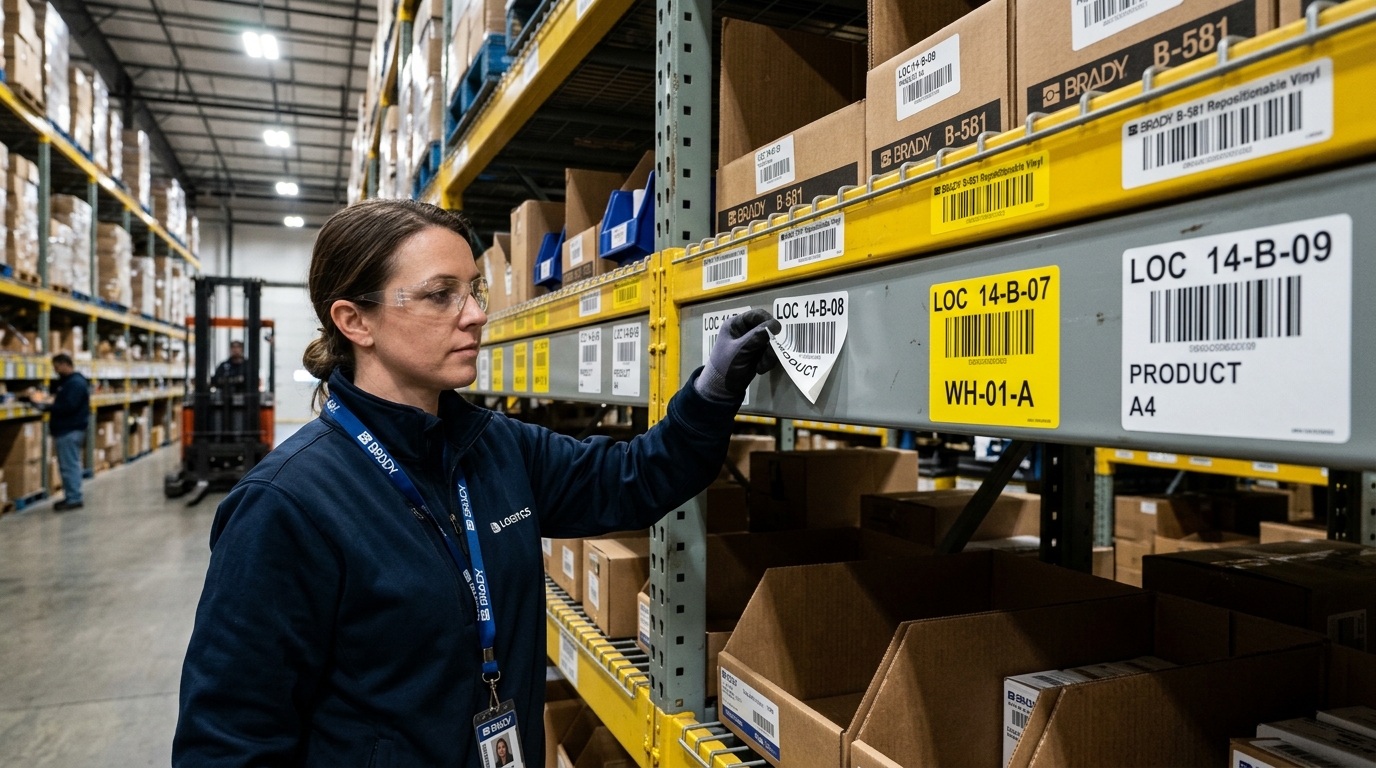
- Identity changes on a schedule (slotting, kanban, seasonal layouts): Magnetic on ferrous racking; repositionable vinyl elsewhere.
- The surface outranks the label (leases, finished paint, customer property): Repositionable B-581, or tag-and-tie so the surface is never touched.
- The surface defeats adhesives (wet, oily, frosted, hot): Tag-and-tie or mechanical mounts — the oily-metal and freezer guides cover when adhesive can still be rescued.
- No surface exists (cables, hoses, mesh, chain-link): Sleeves before termination; tie-on tags after. Wire-specific sizing in the AWG chart.
- Permanence actually required after all: Back to the adhesive selection guide — mechanical systems trade permanence away by design, and safety-critical identification (nameplates, arc flash, LOTO) should never dangle from a zip tie.
Magnetic and repositionable systems are for operational identity — locations, contents, status. Regulatory markings (nameplates, safety warnings, pipe markers) are permanent by definition; putting an arc flash label on a magnet because the wall was rented is a finding waiting for its auditor.
When adhesive IS the answer
The adhesive selection guide covers the other half — acrylic vs. rubber chemistry, dwell-time physics, and the peel data behind permanent bonds.